
Table of Contents
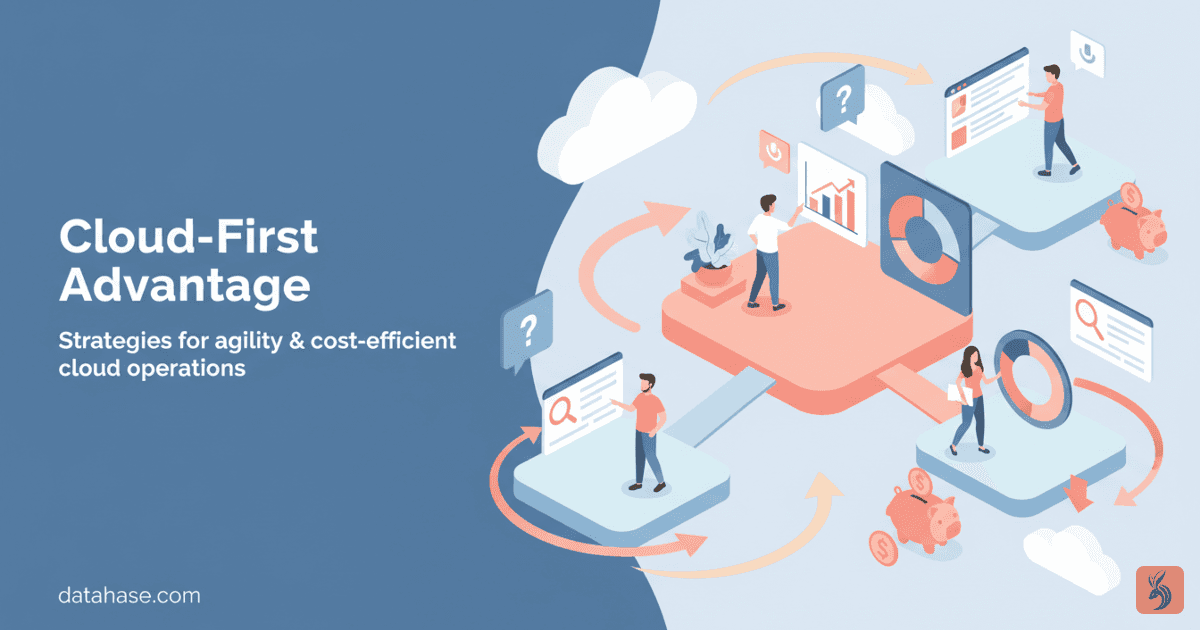
This guide provides a structured approach to enhancing business agility and achieving cost savings through strategic cloud adoption. Navigate through the key sections below to gain a comprehensive understanding of cloud implementation best practices. Each chapter offers insights into optimizing your cloud strategy for maximum business impact.
- Introduction to Cloud Strategies
- Enhancing Business Agility with the Cloud
- Achieving Cost Savings in the Cloud
- Cloud Security and Compliance
- Future Trends in Cloud Computing
Introduction
Thinking about moving your business to the cloud? Good. This guide breaks down exactly how companies can use cloud computing to get way more flexible and save a serious chunk of cash. We'll walk you through the whole process of adopting the cloud, giving you real-world tips and smart ways to revamp your IT setup and how you work.
Our goal? To give business owners, IT folks, and anyone making the big decisions the info they need to pick the right cloud solutions. You'll learn how to pick the best cloud services, put strong security in place, and fine-tune your cloud setup so it runs like a dream.
This isn't just fluff. We're talking about practical advice that tackles those common headaches and helps you get the most out of cloud tech. By getting a handle on the basics and the smarter moves we lay out, you'll be ready to innovate and get ahead of the competition.
Chapter 3: Mastering Content Strategy for Search Visibility and User Engagement
A robust content strategy is fundamental to leveraging cloud services effectively for business growth. It ensures that your message reaches the right audience, addresses their specific needs, and establishes your brand as a credible authority in the technology solutions space. This involves a systematic approach to understanding what users are searching for and how to best deliver that information. Without a well-defined content strategy, even the most innovative software solutions risk remaining undiscovered.
The Core of Content Research: Understanding Search Intent and Gaps
The process for conducting comprehensive content research for SEO begins with a deep dive into the search landscape. This means performing targeted Google searches for your primary keywords to identify the top-ranking pages. The analysis of these pages is critical for discerning the dominant search intent—is the user looking for information, a comparison, or a direct solution? As outlined by Moz, understanding search intent is crucial because it dictates the 'why' behind a user's query. This research also helps pinpoint 'People Also Ask' (PAA) questions, which are invaluable for uncovering related user curiosities and potential subtopics, as noted by Search Engine Land. Identifying content gaps, areas where competitors are succeeding but you are not, provides a distinct advantage.
Gathering Authoritative Data and E-E-A-T Signals
Concurrent with identifying content gaps, it is essential to seek out authoritative sources for supporting data, statistics, and expert insights. This practice directly contributes to building Experience, Expertise, Authoritativeness, and Trustworthiness (E-E-A-T), a key signal Google values. According to Google Search Essentials, creating helpful, reliable, and people-first content is paramount. Demonstrating expertise and trustworthiness through well-researched content and citing credible sources enhances your E-E-A-T profile significantly. For instance, when discussing AI-powered recruitment platforms, citing statistics on hiring efficiency improvements from reputable HR tech reports or academic studies substantiates your claims and builds confidence with your audience.
Synthesizing Research into Actionable Content Plans
The final stage involves synthesizing all gathered information into a structured research summary. This summary should include a detailed content outline, a list of credible sources with key excerpts and their associated credibility scores, target keywords (both primary and secondary), the identified dominant search intent, a compiled list of 'People Also Ask' questions, specific content gaps to address, and a clear opportunity for a featured snippet. Ahrefs emphasizes that content gap analysis helps uncover opportunities to attract new audiences. By filling these gaps with tailored content, you can not only improve search rankings but also provide more comprehensive value than competitors. For example, a common gap is the lack of practical, step-by-step guidance on implementing E-E-A-T signals in content creation; addressing this provides immediate value.
Optimizing for Featured Snippets
Capturing featured snippets, the answer boxes that appear at the top of Google search results, is a significant goal. Backlinko's guide on featured snippets highlights that optimizing content to answer common questions directly and concisely is key. For instance, if the PAA box frequently displays questions about calculating cloud cost savings, a well-structured paragraph directly answering this, perhaps including a simple formula or a range of typical savings percentages, has a strong chance of appearing as a featured snippet. Ensuring your content is both informative and easily digestible for quick answers is crucial for this type of visibility.
FAQ
Navigating the complexities of cloud services often brings forth numerous questions. We have compiled answers to some of the most frequently asked questions to provide clarity and support your decision-making process.
What is the primary purpose of thorough content research?
The principal aim of content research is to thoroughly understand what your target audience is searching for and the intent behind their queries. This analysis informs content creation, ensuring it directly addresses user needs, answers their questions, and aligns with search engine algorithms. By identifying dominant search intents and 'People Also Ask' questions, businesses can create highly relevant and discoverable content, establishing authority and driving organic traffic. It forms the foundational strategy for effective SEO and user engagement.
How can a business effectively identify content gaps?
Identifying content gaps involves a comparative analysis of your existing content against that of your competitors. By examining top-ranking pages for relevant keywords, you can pinpoint topics or specific subtopics that competitors cover but your own website does not. Tools like Ahrefs facilitate this by showing you what keywords your competitors rank for that you do not. Filling these gaps with original, high-quality content offers a significant opportunity to attract new audience segments and improve your overall search visibility.
What are the fundamental types of search intent?
Search intent is broadly categorized into four main types: informational (seeking knowledge), navigational (looking for a specific website), transactional (intending to make a purchase), and commercial investigation (comparing options before a purchase). Understanding which intent dominates a user's query is critical for tailoring content that precisely meets their needs at that specific stage of their journey.
What practical steps can be taken to enhance E-E-A-T signals?
To improve your E-E-A-T (Experience, Expertise, Authoritativeness, Trustworthiness), focus on creating content that is accurate, well-researched, and demonstrates practical experience. Cite authoritative sources consistently, feature bylined articles from subject matter experts, and encourage positive user reviews. Ensure your website has clear author bios and contact information. For cloud services, this might involve case studies detailing real-world implementation successes and expert opinions from certified cloud architects.
What constitutes a featured snippet and how does one achieve this position?
A featured snippet is a concise answer to a user's query, displayed prominently at the top of Google search results. To obtain one, structure your content to directly and clearly answer common questions, ideally in a paragraph or list format. Ensure your content is authoritative and provides a definitive answer. Conciseness and clarity are key; think about how you would explain the topic in a few sentences to someone unfamiliar with it.
Conclusion
In summary, establishing a robust content research strategy is not merely an option but a fundamental requirement for any business aiming to enhance its cloud service offerings and achieve substantial cost savings. By meticulously understanding search intent and actively identifying content gaps, organizations can ensure their messaging resonates deeply with their target audience. This systematic approach, as supported by resources like Moz and Ahrefs, directly contributes to superior search engine optimization and increased user engagement. Furthermore, integrating authoritative data and demonstrating strong E-E-A-T signals, in line with Google Search Essentials, builds essential credibility and trustworthiness. This foundational research empowers you to create content that not only ranks well but also genuinely solves user problems.
To move forward, begin by auditing your current content performance against competitor offerings. Implement a structured process for keyword research and search intent analysis for your key cloud service areas. Actively seek out and incorporate data from reputable sources to bolster your content's authority and expertise. Consider optimizing specific content pieces for featured snippets by providing clear, concise answers to frequently asked questions about cloud agility and cost efficiency. By consistently applying these best practices, you position your business to lead the change in the cloud services landscape, offering transformative solutions that empower clients and drive growth.