
Table of Contents
This guide offers a comprehensive exploration of how intelligent automation, powered by artificial intelligence, is fundamentally transforming business operations. We will navigate through key areas where AI is making a significant impact, from revolutionizing customer interactions to optimizing internal workflows. Discover the advantages and potential of AI in your business.
- Introduction: The AI-Powered Transformation
- Understanding Intelligent Automation
- AI in Customer Service: Revolutionizing Support
- Automating Business Processes with AI
- The Future of Work: AI and Human Collaboration
- Implementing AI: Best Practices and Considerations
- Conclusion: Embracing the AI Revolution
Introduction: The AI-Powered Transformation
Welcome to this comprehensive guide detailing the profound impact of artificial intelligence and intelligent automation on modern business operations. This resource is meticulously crafted for business leaders, IT professionals, and operational strategists seeking to understand and implement AI solutions. We aim to provide an authoritative and in-depth overview of how AI is not merely enhancing processes but fundamentally revolutionizing industries. From optimizing customer interactions to streamlining internal workflows, intelligent automation is leading the change towards greater efficiency and innovation.
Artificial intelligence in customer service, for instance, is transforming how businesses engage with their clientele. As defined by Zendesk, AI in customer service involves utilizing artificial intelligence technologies to improve and automate support procedures, encompassing chatbots, virtual assistants, and analytics tools that deliver faster, more personalized, and efficient customer experiences. This guide will explore the critical benefits of AI in customer service, including enhanced customer satisfaction through quicker resolutions and consistent service, as highlighted by AWS. We will also examine how AI empowers agents, enabling them to focus on complex issues rather than repetitive tasks, a key trend identified by Gartner. Prepare to discover the practical applications and strategic advantages of integrating AI into your operational framework.
AI in Customer Service: Revolutionizing Support
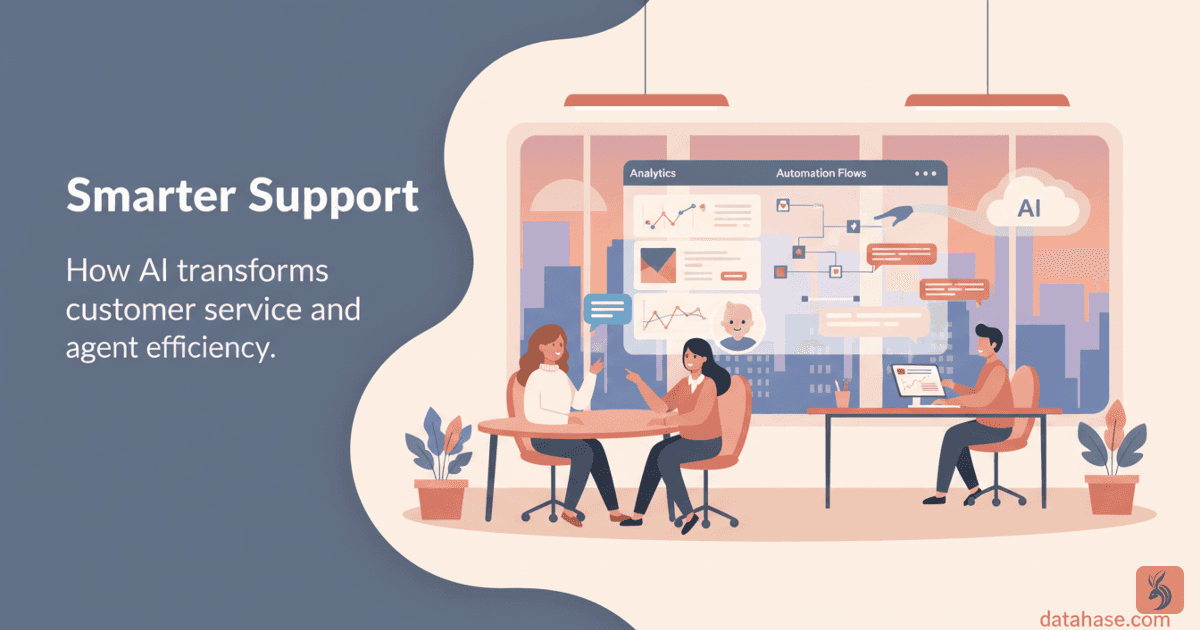
AI in customer service refers to the use of artificial intelligence technologies to enhance and automate customer support processes. This includes chatbots, virtual assistants, and AI-powered analytics tools that help businesses provide faster, more personalized, and efficient customer experiences. The integration of AI is fundamentally transforming how businesses interact with their clientele, moving beyond basic query resolution to proactive engagement and highly personalized support.
Enhancing Customer Satisfaction with AI
One of the most significant benefits of AI in customer service is its ability to dramatically improve customer satisfaction. By deploying AI-powered chatbots and virtual assistants, businesses can offer instant responses to customer inquiries, 24/7. This immediate availability addresses a key customer expectation: speed. Research from IBM indicates that AI enables businesses to deliver exceptional customer experiences through intelligent automation and personalized recommendations. Furthermore, AI can analyze customer sentiment, allowing support teams to understand emotional nuances and respond more empathetically. Gartner highlights that key trends such as conversational AI and hyper-personalization are instrumental in achieving this elevated user experience.
Reducing Operational Costs and Improving Efficiency
Beyond enhancing the customer experience, AI offers substantial benefits in terms of operational efficiency and cost reduction. Automating repetitive tasks, such as answering frequently asked questions or processing simple requests, frees up human agents to handle more complex or sensitive issues. This reallocation of resources directly impacts productivity. AWS services like Amazon Connect and Amazon Lex empower businesses to build intelligent virtual agents that can manage a significant volume of interactions, thereby reducing the need for a large human support staff. This automation also leads to lower training costs and a more consistent service delivery model.
Key AI Applications in Customer Support
The application of AI in customer service is diverse and growing. Chatbots and virtual assistants are perhaps the most visible tools, providing immediate self-service options. However, AI's capabilities extend much further. Sentiment analysis tools, for instance, can gauge customer emotions from text or voice interactions, providing valuable insights into satisfaction levels and potential churn risks. Predictive analytics can anticipate customer needs before they arise, enabling proactive outreach and support. Moreover, AI-powered automated ticket routing ensures that customer issues are directed to the most appropriate agent or department swiftly, minimizing resolution times.
The Hybrid Approach: AI and Human Collaboration
It is crucial to understand that the optimal strategy often involves a hybrid approach, where AI complements, rather than replaces, human agents. While AI excels at handling high volumes of routine queries and providing instant information, human agents are indispensable for managing complex, nuanced, or emotionally charged situations. This collaborative model, as suggested by Zendesk, allows human agents to focus on high-value interactions that require critical thinking, empathy, and problem-solving skills. This synergy ensures that customers receive the best possible support, whether through efficient automation or personalized human interaction.
Implementing AI in customer service is not merely about adopting new technology; it is about fundamentally transforming the support experience. By embracing these intelligent automation tools, businesses can achieve higher customer satisfaction, reduce operational costs, and empower their human support teams to deliver exceptional service.
FAQ
Exploring the integration of artificial intelligence into customer service operations often brings forth pertinent questions. We address some of the most common inquiries regarding AI in customer support to provide clarity and actionable insights for businesses considering this transformative technology.
What are the main benefits of using AI in customer service?
The primary benefits encompass significant enhancements in customer satisfaction, achieved through faster response times and 24/7 availability. Furthermore, AI dramatically improves operational efficiency by automating repetitive tasks, thereby reducing costs. It also empowers human agents to focus on more complex customer issues, leading to increased job satisfaction and better utilization of their skills. This leads to a more streamlined and effective support system overall.
How does AI improve customer satisfaction?
AI improves customer satisfaction by providing instant, consistent, and personalized support. Chatbots and virtual assistants can immediately address common queries, eliminating wait times. AI also enables hyper-personalization by analyzing customer data to offer tailored solutions and recommendations. According to Gartner, conversational AI and advanced analytics are key trends driving this improvement. This ensures customers receive relevant and timely assistance, enhancing their overall experience.
What are some examples of AI tools used in customer service?
Common examples include AI-powered chatbots for instant query resolution, virtual assistants for guiding customers through processes, and AI-driven analytics for sentiment analysis and predicting customer needs. Automated ticket routing systems also leverage AI to ensure issues are directed to the correct department efficiently. Amazon Web Services, for instance, offers tools like Amazon Connect and Amazon Lex to build intelligent virtual agents.
Can AI replace human customer service agents?
AI is generally not intended to completely replace human customer service agents but rather to augment their capabilities. While AI excels at handling high volumes of routine inquiries and data processing, human agents remain essential for complex problem-solving, handling sensitive situations, and providing empathetic support. The most effective strategy often involves a hybrid approach where AI and human agents collaborate to deliver superior customer experiences.
How does AI help reduce customer service costs?
AI reduces costs primarily by automating a significant portion of customer interactions, thereby lowering the need for a large human support staff. This automation decreases labor costs, training expenses, and the cost associated with handling a high volume of inquiries. By increasing agent efficiency and enabling faster resolution times, AI also minimizes the cost per interaction. IBM suggests AI's role in reducing costs is a key driver for adoption.
What are the challenges of implementing AI in customer service?
Key challenges include the initial investment cost for AI technology, the need for high-quality data for training AI models, and potential integration complexities with existing systems. Ensuring data privacy and ethical use of AI are also critical considerations. Furthermore, organizations must manage the change within their teams, addressing potential employee concerns and providing necessary training for a hybrid work environment.
Conclusion
The journey through AI-powered intelligent automation reveals its profound capacity to revolutionize business operations. As we have explored, AI in customer service, in particular, offers a compelling pathway to enhanced customer satisfaction and significant operational efficiencies. By integrating AI tools, businesses can automate routine tasks, provide instant and personalized support 24/7, and gain deeper insights into customer needs. This strategic adoption of AI is not merely about technological advancement but about fundamentally transforming the user experience and driving tangible business growth. Remember, organizations like AWS and Salesforce provide robust platforms to facilitate this transition.
Moving forward, businesses should prioritize a strategic, phased approach to AI implementation. Begin by identifying key areas where automation can yield the most immediate benefits, such as in handling high-volume customer inquiries. Invest in training your teams to work collaboratively with AI, ensuring that human expertise is amplified, not replaced. Furthermore, remain vigilant regarding ethical considerations and data privacy, as these are crucial for building trust and long-term success. Embracing AI-powered transformation empowers your organization to stay competitive and lead the change in your industry.