
Table of Contents
Navigate our comprehensive guide to understanding the cloud advantage. This section outlines the key topics covered, ensuring you can easily access information on how cloud transformation fuels agility and innovation. Explore the benefits, strategies, and future implications of embracing cloud technology for your business.
Introduction
This comprehensive guide delves into the transformative power of cloud adoption, exploring how embracing cloud technology is not merely an operational upgrade but a fundamental shift that drives agility and innovation for modern businesses. We will dissect the multifaceted advantages of cloud transformation, examining how it empowers organizations to respond rapidly to market changes, foster a culture of continuous improvement, and unlock new avenues for growth. This resource is meticulously crafted for business leaders, IT professionals, and decision-makers who are seeking to understand and harness the full potential of cloud computing to gain a competitive edge. From foundational concepts to advanced strategies, this guide aims to be your definitive roadmap, establishing a clear understanding of why cloud transformation is essential for sustained success in today's dynamic digital landscape.
The journey into the cloud offers unparalleled opportunities for enhanced operational efficiency, scalable infrastructure, and accelerated innovation cycles. By migrating to cloud-based solutions, businesses can significantly reduce their IT overhead, improve data accessibility, and strengthen their security posture. Furthermore, cloud services facilitate the seamless integration of advanced technologies such as artificial intelligence and machine learning, enabling more sophisticated data analysis and personalized customer experiences. This guide will navigate these critical aspects, providing actionable insights and best practices to ensure a successful transition and maximize the return on your cloud investment. We aim to demystify complex cloud concepts and illustrate their tangible business benefits.
The Transformative Role of AI in Enhancing Customer Service
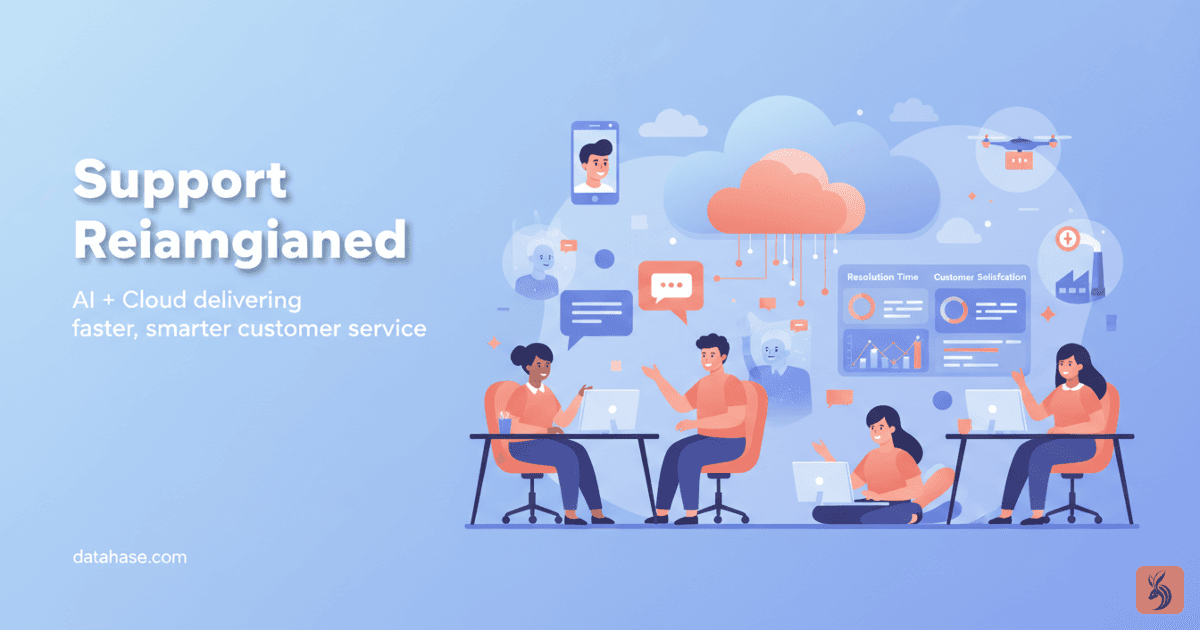
Artificial intelligence is fundamentally reshaping customer service operations, moving beyond simple automation to deliver intelligent, personalized, and proactive support. AI in customer service leverages technologies such as machine learning and natural language processing (NLP) to better understand customer needs, automate responses, and provide valuable insights. This integration is not merely about efficiency; it is a strategic imperative for businesses seeking to elevate their customer experience and foster loyalty. As detailed by Zendesk, AI in customer service encompasses tools like chatbots, virtual assistants, and predictive analytics, all designed to automate tasks, personalize interactions, and expedite issue resolution.
Understanding the Core Benefits of AI in Customer Support
The primary advantages of incorporating AI into customer support are numerous and impactful. Firstly, AI-powered solutions offer 24/7 availability, ensuring customers receive assistance whenever they need it, a significant improvement over traditional business hours. Amazon Web Services highlights that this constant availability helps reduce wait times dramatically, thereby enhancing overall customer satisfaction. Furthermore, AI excels at handling routine and repetitive queries through chatbots and virtual assistants. This automation frees human agents from mundane tasks, allowing them to dedicate their expertise to more complex, high-value customer issues that require human empathy and critical thinking.
The ability of AI to analyze vast amounts of customer data in real-time is another critical benefit. Tools employing sentiment analysis can gauge customer emotions, enabling service representatives to tailor their responses more effectively and de-escalate potentially negative situations. Gartner points to the rise of conversational AI as a key trend, emphasizing its role in facilitating more natural and intuitive customer interactions. Predictive analytics, a subset of AI, enables businesses to anticipate customer needs or potential problems before they arise, facilitating proactive outreach and problem resolution. This proactive approach not only solves issues before they escalate but also demonstrates a commitment to customer well-being, fostering deeper relationships and increasing retention rates.
AI Technologies Driving Customer Service Innovation
Several key AI technologies are at the forefront of this customer service revolution. Chatbots and virtual assistants, powered by NLP, are becoming increasingly sophisticated. They can understand natural language, answer frequently asked questions, guide users through processes, and even complete transactions. Salesforce notes that AI enables personalized recommendations and automates routine tasks via these conversational agents. These tools are often the first point of contact, providing instant responses and a smooth user experience for common inquiries.
Sentiment analysis tools are vital for understanding the emotional tone of customer communications across various channels, including emails, social media, and chat logs. This insight allows businesses to identify dissatisfied customers quickly and intervene appropriately. IBM emphasizes that AI provides agents with real-time insights, empowering them to deliver more effective support. Beyond reactive measures, predictive analytics uses historical data to forecast customer behavior, identify potential churn risks, and suggest personalized offers or solutions. This capability transforms customer service from a cost center into a revenue driver and a powerful tool for competitive differentiation.
Enhancing Customer Experience Through Intelligent Automation
The integration of AI directly translates into a superior customer experience. By providing instant responses, reducing wait times, and offering personalized interactions, AI meets the heightened expectations of today's consumers. Research indicates that customers value speed and personalization, both of which AI can deliver at scale. AI ensures consistency in service delivery, regardless of the time of day or the agent involved, minimizing the variability often seen in human-only support teams. The personalized recommendations and proactive engagement capabilities fostered by AI create a feeling of being understood and valued, which is essential for building lasting customer loyalty. This intelligent automation not only streamlines operations but also cultivates stronger, more meaningful customer relationships.
FAQ
Artificial intelligence is rapidly transforming how businesses interact with their customers. As organizations consider integrating AI into their customer service operations, several common questions arise. This section addresses some of the most frequently asked questions regarding AI in customer service to provide clarity and actionable insights.
What are the main benefits of using AI in customer service?
The primary benefits of employing AI in customer service are substantial. These include 24/7 availability, drastically reduced customer wait times, and enhanced operational efficiency through automation of routine tasks. AI systems can handle a high volume of inquiries simultaneously, providing instant responses and freeing up human agents to focus on complex issues. Furthermore, AI facilitates personalized customer interactions and proactive problem-solving by analyzing data and predicting customer needs. As noted by Zendesk, AI tools automate tasks, personalize experiences, and provide faster resolutions, ultimately leading to improved customer satisfaction and loyalty.
How does AI improve the customer experience?
AI significantly improves the customer experience by offering speed, personalization, and consistency. Chatbots and virtual assistants provide immediate support, meeting customer expectations for quick resolutions. Sentiment analysis and predictive analytics allow for tailored responses and proactive engagement, making customers feel understood and valued. Salesforce highlights that AI enables personalized recommendations and sentiment analysis to improve agent performance and overall satisfaction. This intelligent automation ensures a seamless and efficient journey, regardless of the time or channel, fostering stronger customer relationships.
What are the different types of AI used in customer service?
Several key AI technologies are integral to modern customer service. These include chatbots and virtual assistants, powered by Natural Language Processing (NLP) to understand and respond to customer queries. Sentiment analysis tools interpret customer emotions in communications, enabling better response strategies. Predictive analytics forecasts customer behavior and needs, facilitating proactive engagement. According to IBM, AI leverages machine learning and NLP to automate interactions and offer agents real-time insights, leading to more effective support.
Can AI replace human customer service agents?
While AI can automate many tasks and handle a significant portion of customer interactions, it is unlikely to completely replace human agents. AI excels at handling high-volume, repetitive queries and providing data-driven insights. However, human agents remain essential for complex problem-solving, empathetic communication, and building deeper customer relationships. Gartner suggests AI is augmenting agents rather than replacing them, empowering them with better tools and insights. The most effective customer service strategies often involve a hybrid approach, where AI and human agents work collaboratively.
What are the challenges of implementing AI in customer service?
Implementing AI in customer service presents several challenges. These include the initial cost of technology investment, the need for significant data to train AI models effectively, and potential integration issues with existing systems. Ensuring data privacy and ethical use of AI is also paramount. Additionally, overcoming customer resistance to interacting with AI and managing the transition for existing staff require careful planning and execution. A robust strategy is essential to mitigate these challenges and maximize the benefits.
Conclusion
The integration of AI into customer service represents a pivotal advancement, fundamentally enhancing how businesses engage with their clientele. By deploying tools such as chatbots, virtual assistants, sentiment analysis, and predictive analytics, organizations can achieve unprecedented levels of efficiency and personalization. These technologies automate routine inquiries, as noted by Zendesk, freeing human agents to address more complex issues, thereby optimizing resource allocation. The capability of AI to provide 24/7 support and deliver instant resolutions directly addresses modern consumer expectations for immediate and accessible assistance.
Moving forward, businesses seeking to remain competitive must embrace these AI-driven innovations. The next steps involve carefully evaluating specific business needs and selecting the appropriate AI solutions to meet those demands, perhaps starting with a pilot program to assess impact and refine strategies. Continuous monitoring and adaptation of AI systems are essential to harness their full potential. Embracing AI in customer service is not merely an operational upgrade; it is a strategic imperative for fostering stronger customer relationships, driving loyalty, and securing a sustainable advantage in the evolving marketplace.